Foundation waterproofing and drainage illustration

GTA Concrete & Masonry / Foundation care

Waterproofing &
Foundation Cracks

A damp basement deserves more than a surface patch. We help you understand the symptoms, assess the likely source and plan a repair suited to your foundation and property.

Service illustration

Start with the source

A considered solution,
not just a fresh coating.

Water can reach a basement through several routes: foundation cracks, wall joints, drainage problems or surface water collecting against the building. Condensation and plumbing leaks can produce similar symptoms, so the first step is understanding when and where moisture appears.

We review the visible foundation conditions, history of leakage, exterior grades and available access before discussing repair options. The appropriate approach may be a targeted crack repair, exterior waterproofing, an interior drainage system or coordinated work addressing more than one issue.

Water control and structural repair are different needs. Displacement, widening cracks or bowing walls may require a qualified structural assessment before a waterproofing method is selected.

Options matched to the condition

Manage moisture with a clear plan.

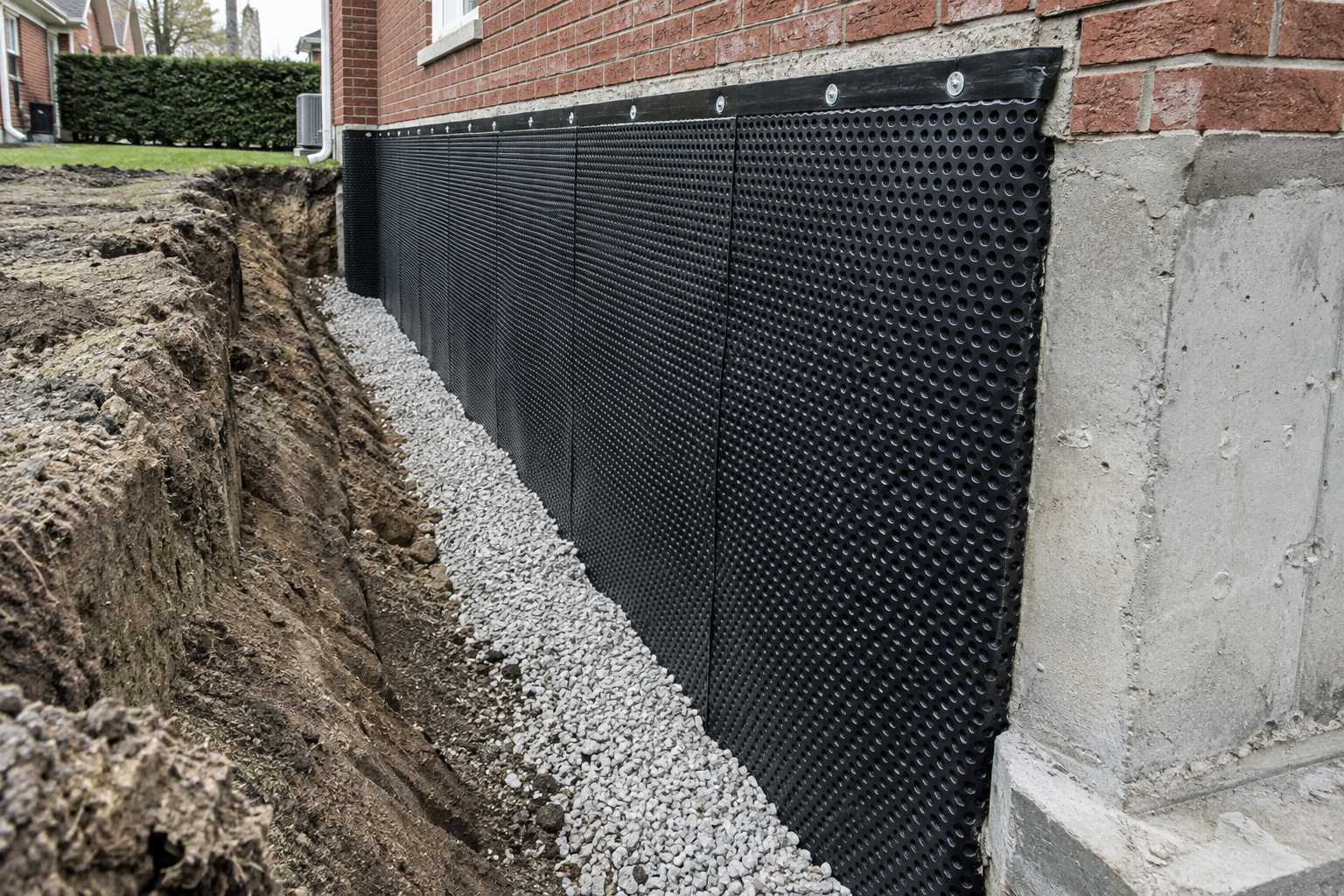
Exterior waterproofing

Address suitable foundation areas from the outside where access and site conditions allow.

  • Excavation and exposed-wall preparation by scope
  • Appropriate repairs before membrane application
  • Waterproofing membrane and protective drainage layers
  • Footing-drain review, backfill and restoration planning

Foundation crack repairs

Target assessed cracks using a method compatible with the wall and condition.

  • Review of crack location and leakage history
  • Injection options for suitable poured-concrete cracks
  • Interior or exterior access considered by project
  • Identification of conditions needing further assessment

Interior drainage options

Manage incoming water when an interior approach is appropriate for the property.

  • Interior drainage-channel planning
  • Wall drainage layers where specified
  • Sump and discharge coordination as required
  • Access, floor reinstatement and maintenance considerations

Drainage discharge, plumbing or electrical work, structural repairs and finish restoration must be defined in the scope. No single waterproofing method is suitable for every foundation.

Understand the trade-offs

Choose the approach around your home.

Key decisions to discuss

  • Exterior accessDecks, driveways, landscaping, buried services and neighbouring structures may affect excavation and restoration requirements.
  • Interior conditionsFinished rooms, stored items and floor access influence disruption. An interior drainage system manages water; it does not make the exterior wall waterproof.
  • Crack type & wall constructionPoured concrete, block and stone foundations behave differently. Crack movement, moisture and the surrounding material influence repair suitability.

What affects the estimate?

Repair length and depth, foundation type, excavation access, existing drainage, discharge requirements and the amount of restoration all affect the work. A targeted crack repair has a different scope from excavating an entire foundation wall.

We discuss what the proposed work is intended to address and what falls outside it. If symptoms suggest a plumbing, condensation or structural issue, further assessment may be needed before committing to waterproofing.

Discuss the moisture in my basement

Assessment before intervention

Clarity from the first conversation.

01 / TRACE & ASSESS

Understand the symptoms.

We review where moisture appears, its relationship to rainfall or snowmelt, foundation conditions and access for investigation or repair.

02 / AGREE & COMPLETE

Apply the selected approach.

The defined scope guides preparation, crack treatment, membranes or drainage work, with specialist involvement identified where needed.

03 / RESTORE & REVIEW

Know what comes next.

We discuss agreed reinstatement, maintenance and observation of the repaired area. Any pump system or drainage components require appropriate ongoing care.

Before you begin

Foundation questions,
answered.

Does every foundation crack need injection?

No. Wall construction, crack condition, movement and the source of water determine suitability. Injection may suit certain poured-concrete cracks, but it is not a universal repair for block walls or structural movement.

Is interior or exterior waterproofing better?

They serve different purposes and have different access requirements. Exterior work aims to limit water entry at the outside face; interior drainage manages water that reaches the interior drainage system. We discuss suitability and limitations for your property.

Will waterproofing fix a structural foundation problem?

Not by itself. Waterproofing addresses moisture entry or management. Bowing, displacement, settlement and some crack patterns may require structural assessment and a separate repair plan.

Can a new parge coat stop the leak?

A parge coat is not a complete waterproofing system. Applying a new finish over an active leak can hide evidence without correcting the entry point or drainage condition.

What should I do before the assessment?

Photograph the affected area safely, note when the water appears and identify any recent changes outside. Avoid covering the symptoms before assessment. Stay out of standing water near electrical equipment and seek appropriate urgent help if electrical hazards or rapid flooding are present.

Are landscaping and basement finishes included?

Only as specified in the estimate. Removal of paving, excavation, backfilling, rough grading, flooring and finish reinstatement can be separate parts of the project. We clarify the restoration boundaries before work begins.

Start with a free estimate

Take the uncertainty out of the next step.

Foundation repair and waterproofing enquiries across Hamilton, Niagara and the GTA. Coverage and repair suitability are confirmed for your property.

Share what you know about the issue:

  • Your city and the location of the damp area or crack
  • Photos inside and outside, where safe and accessible
  • When leakage occurs and any previous repairs